Families
Teaching Kids About Money Before the World Does
Why financial literacy for children starts at home, and how gamification can make responsibility feel like play.
By the time most people learn about money management, they’ve already made their first expensive mistakes. Credit cards at university, lifestyle inflation in their twenties, and a vague sense that nobody ever taught them the basics.
I don’t want that for my kids. And I don’t think any parent does.
The Problem Starts Early
Children today are growing up in a world of digital transactions. They see tapping a card, not counting coins. They hear “just buy it online” more than “save up for it.” The physical relationship between work and reward has become invisible.
This means the old lessons — pocket money in a jar, saving for something special — don’t land the same way they used to. We need new approaches that meet kids where they are.
Responsibility Through Play
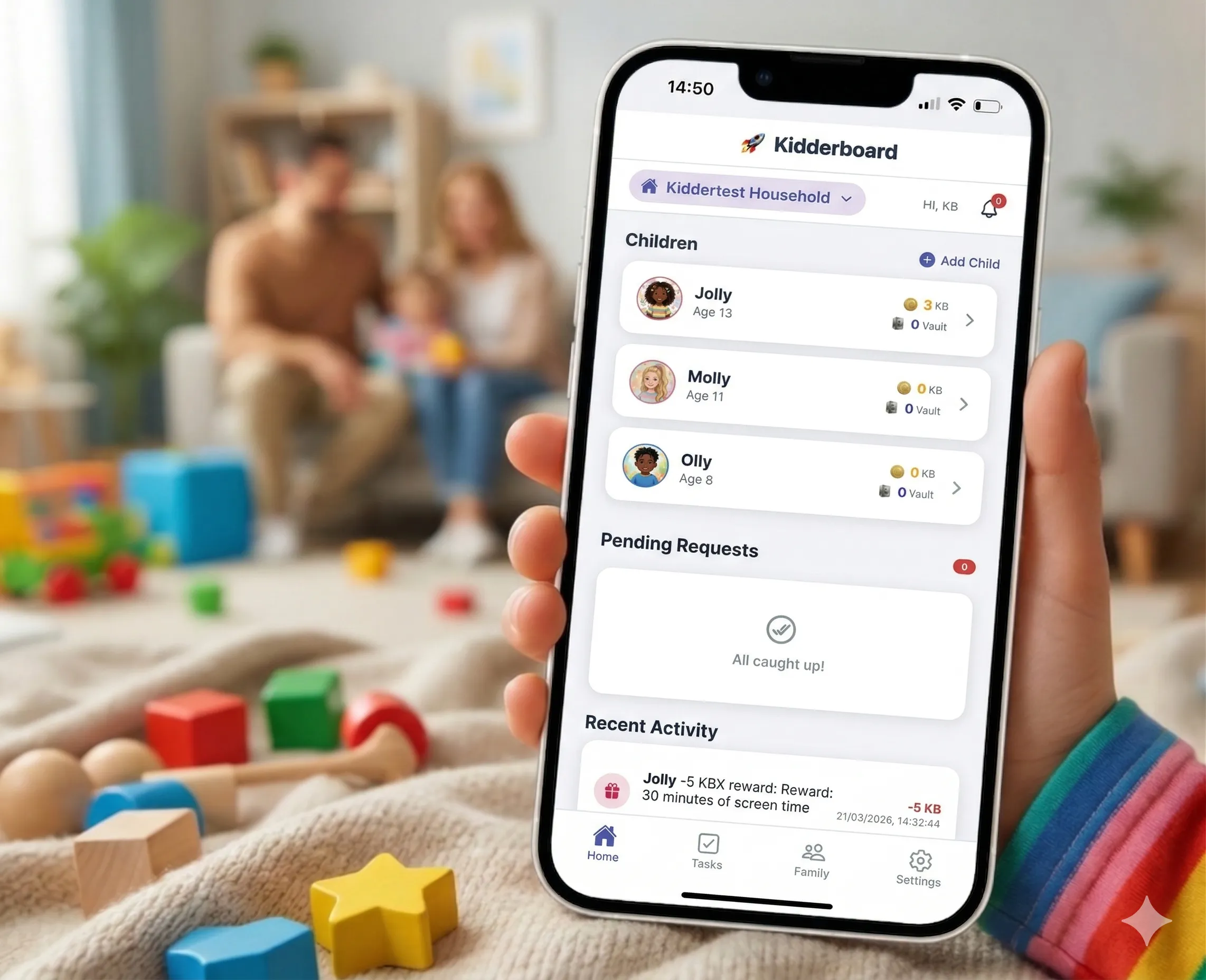
This is the thinking behind Kidderboard. What if we could make the connection between effort and reward visible again? What if kids could see, in real time, that completing tasks earns them something tangible?
The idea is simple: children complete tasks, earn points (we call them KBX), and can save or spend them on rewards that parents control. It turns responsibility into a game — not in a manipulative way, but in a way that mirrors how the real world works.
What Kids Actually Learn
When a child decides to save their KBX for a bigger reward instead of spending them immediately, they’re learning delayed gratification. When they see their balance grow over a week of completed tasks, they’re learning the value of consistency.
These aren’t abstract financial concepts. They’re habits. And habits formed early tend to stick.
It’s Not Just About Money
The deeper lesson isn’t really about money at all. It’s about stewardship — the idea that what you have is yours to manage wisely. Whether that’s time, money, effort, or opportunity, the principle is the same.
If we can teach children that their choices have consequences and that responsibility has rewards, we’re giving them something more valuable than any savings account: a mindset.
Starting the Conversation
You don’t need an app to start this. You need a conversation. Ask your kids what they think money is for. Ask them what they’d save for if they could. Ask them what they think “earning” means.
The answers might surprise you. And they’ll tell you exactly where to start.